Product design
Hawaii Seascapes
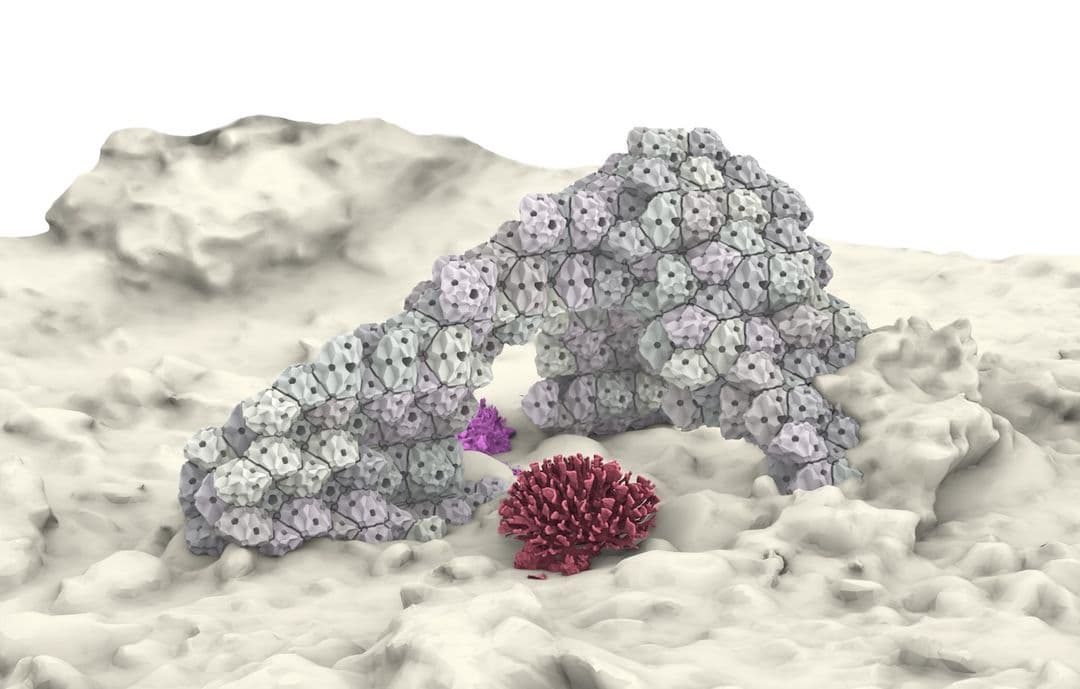
Rebuilding a scalable coral reef for out-planting super corals.
- Partner
- Kuleana Coral, a Hawaii nonprofit
- Services
- Research & development
- Industrial design
- Coral restoration
01 / 06
Challenge
How can we scale and adapt potential solutions for restoring in-shore coral reefs now?
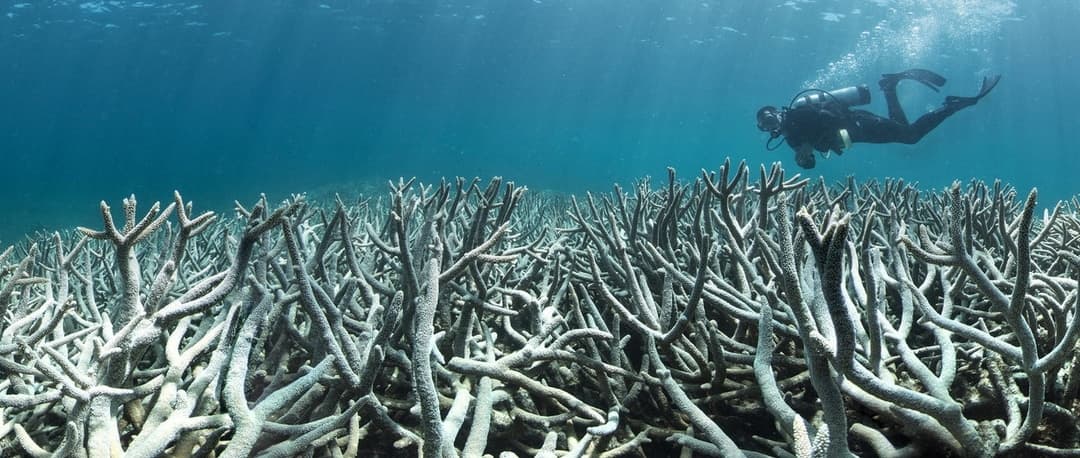
Coral reefs are estimated to be gone by 2050. If we are going to do anything it has to be within the next 5 to 10 years. We believe that applying the scalability of industrial design thinking can help accelerate the growth of corals.
Coral reefs are vital for both people and our marine life. Home to a quarter of the world's fisheries, more than 1 billion people depend on them. They even create jobs for tourism, where $36 billion dollars are generated each year by healthy corals protecting coastlines.
2050
When coral reefs are estimated to be gone
1B+
People who depend on coral reefs
$36B
Generated by healthy reefs each year
02 / 06
Context
Partnered with Hawaii nonprofit Kuleana Coral
Working together with Kuleana Coral, we are hoping to seek funding to focus on the restoration of coral reefs at scale. With the combined forces of their team of scientists and divers, and our design team, we are continuing to work towards a sustainable future.
a.
Founded Hawaii Seascapes
Leverage novel design and engineering methods to improve and refine the existing solution for man-made underwater structures. Build ecosystem resilience by adapting the solution for multiple reef conditions and species across Maui and Oahu. Protect the coastal infrastructure of coral reefs by empowering Hawaii residents through education and outreach activities.
b.
Combine science with the design process
Learn new science-driven processes to gain realistic requirements and explore new concepts through the design process. Compare and analyze failures and successes of coral reef projects and progressive projects.
03 / 06
Opportunity
Combine coral biology with the scalability of industrial design
Mote Research Lab is working to combat the crisis in the world's coral reefs. Vaughan has developed a game-changing technique called “micro-fragmenting” that allows corals to grow more than 25 times faster than normal, which could rapidly restore the dying coral population of healthy coral reefs.
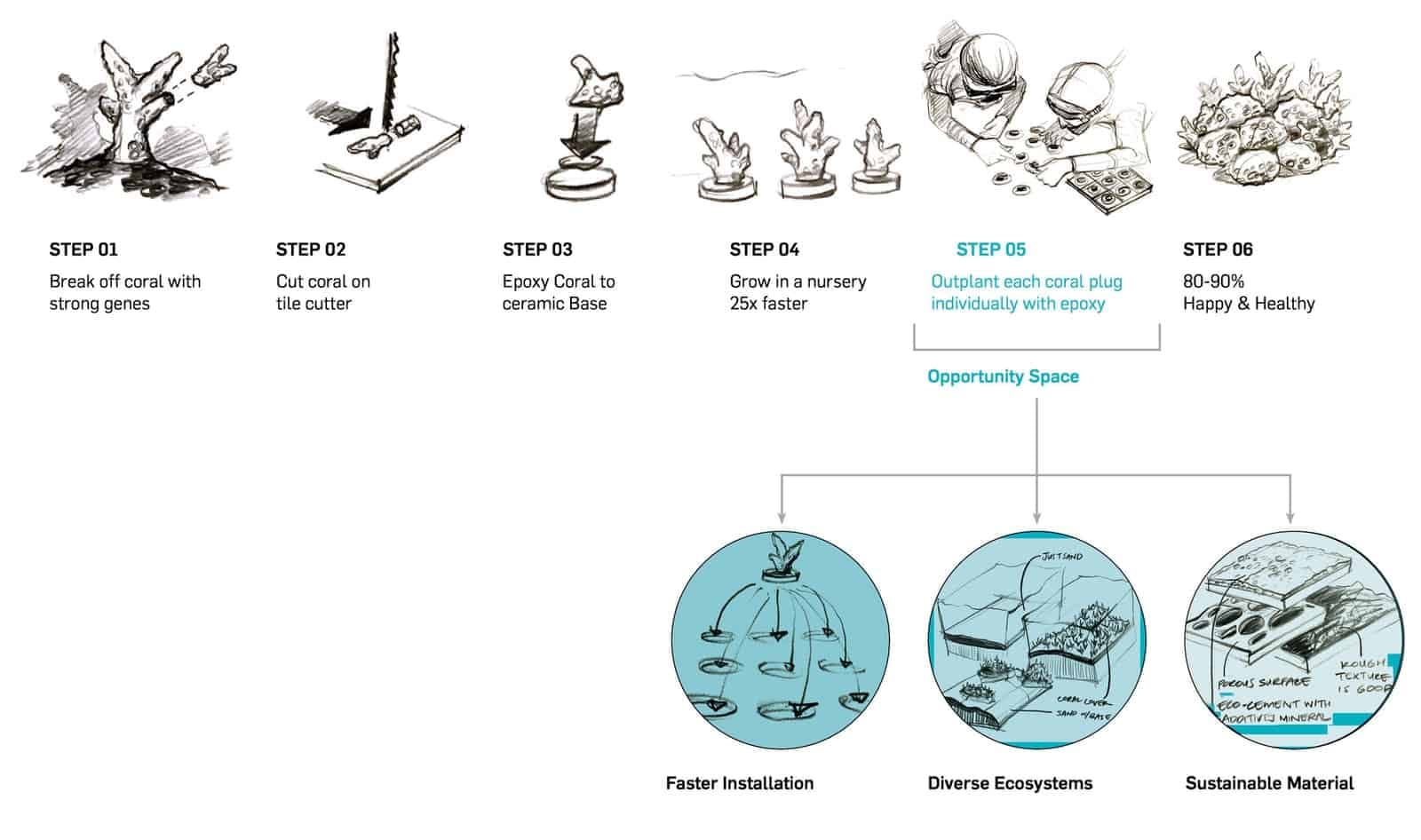
The micro-fragmentation process at Mote Research Laboratory, and the opportunity space it opens
04 / 06
Solution
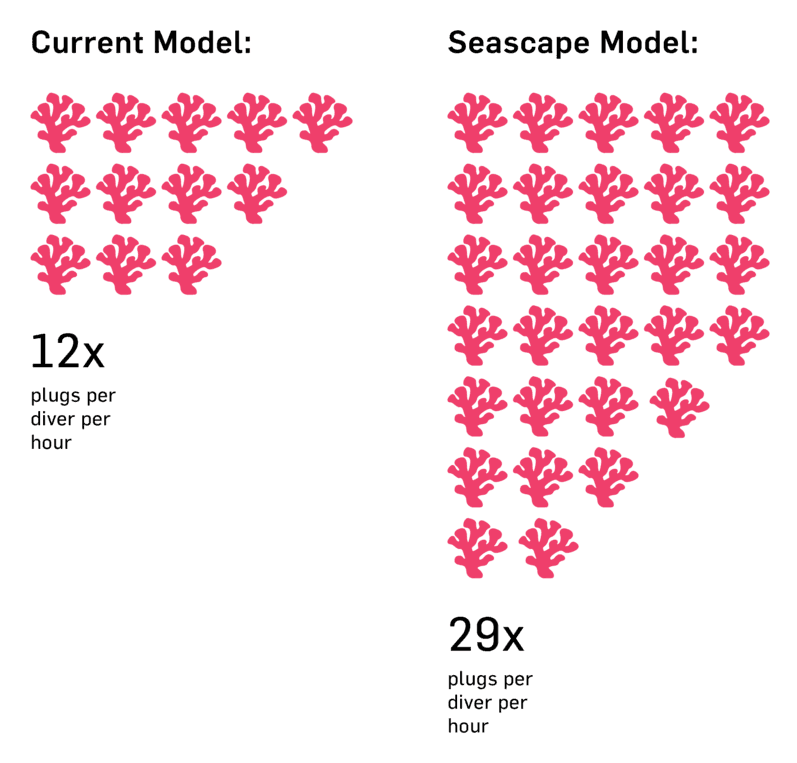
Potentially plant 3x as much coral in 1 day
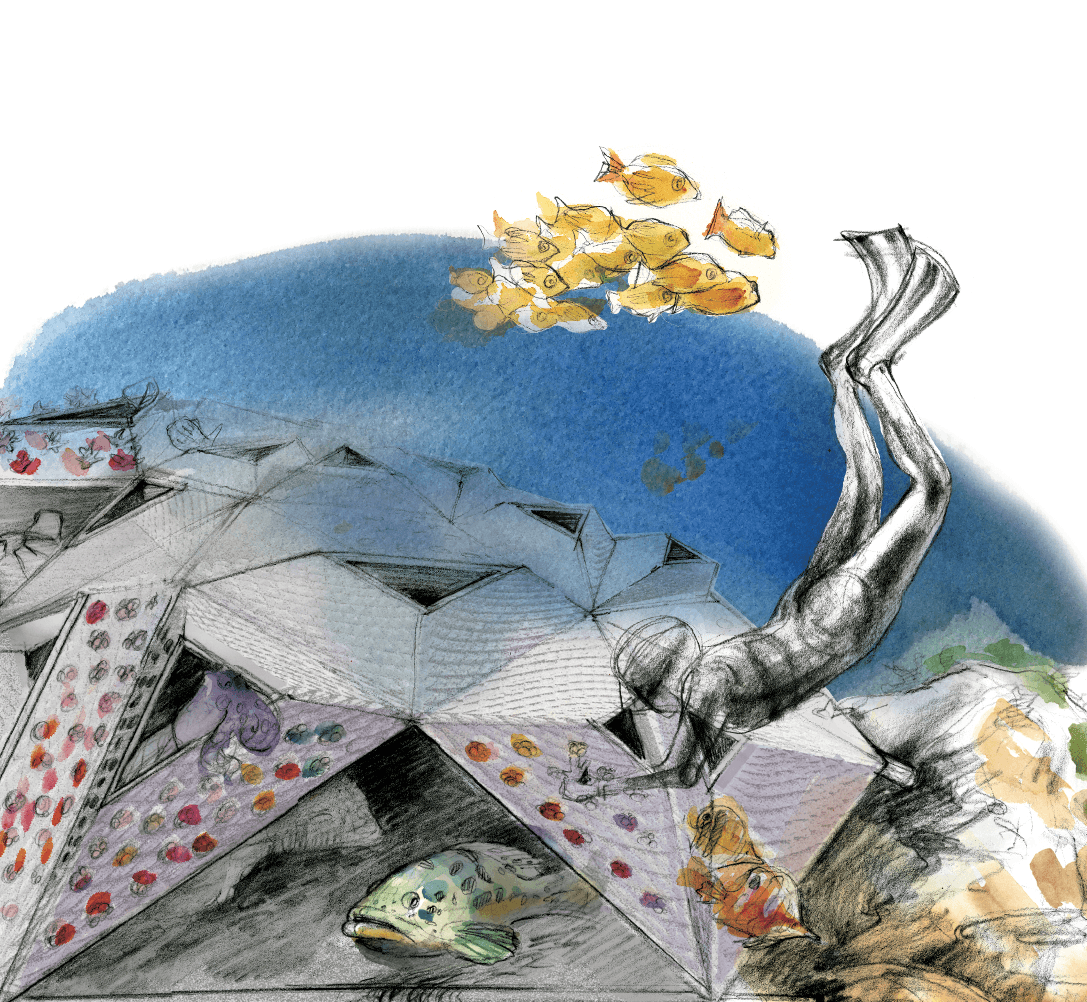
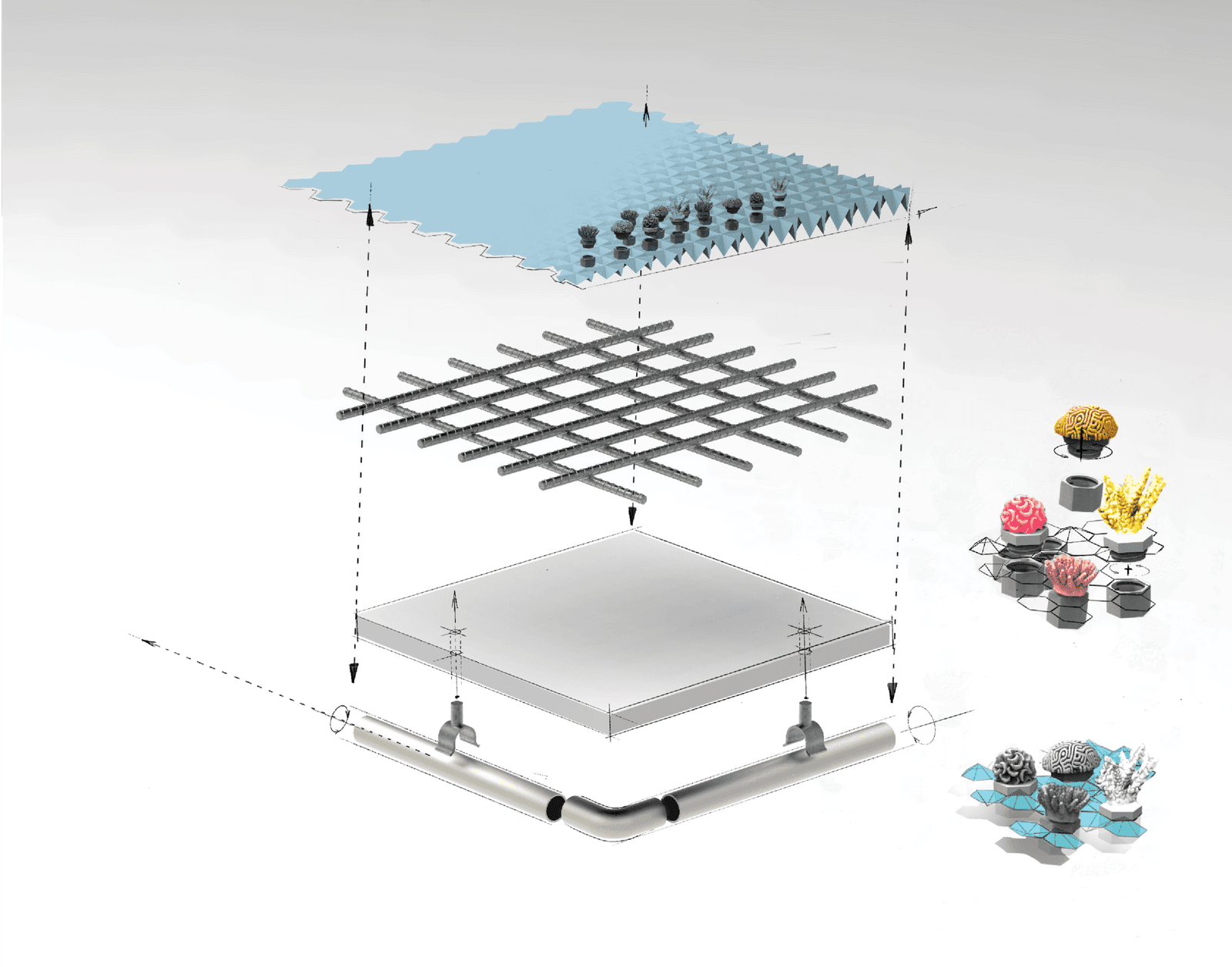
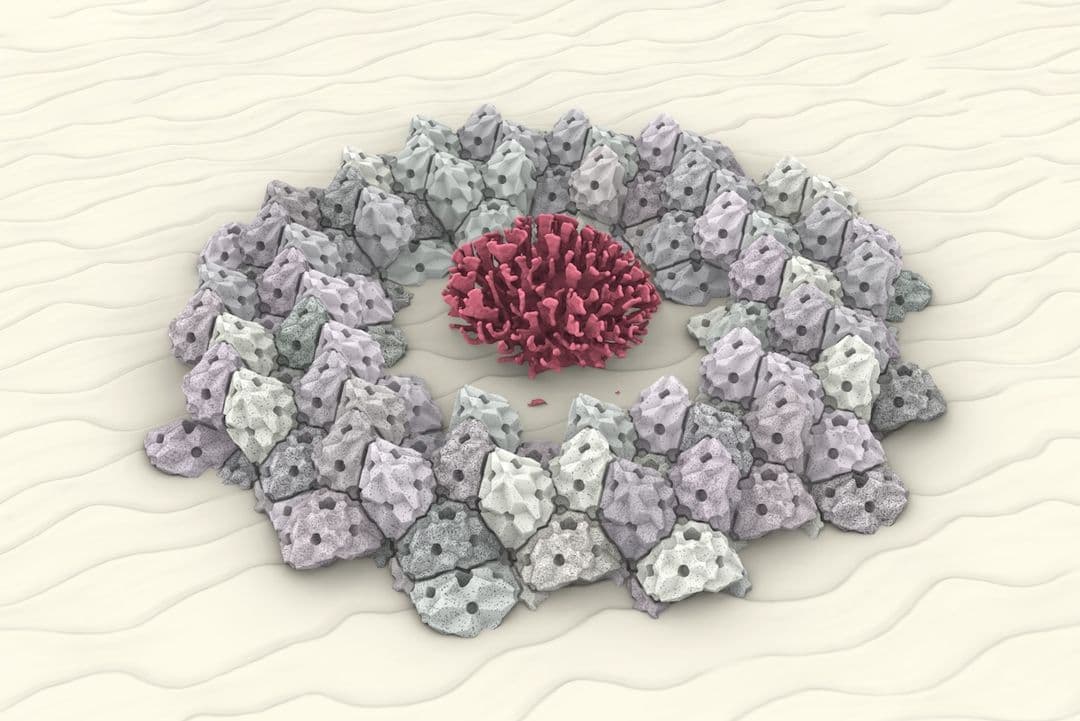
Scaling up the process of micro-fragmentation with an artificial reef structure that can be customized to any reef terrain's needs and allows easy planting of coral plugs. Potentially tapping into hotel industries, eco-tourism and fisheries.
a.
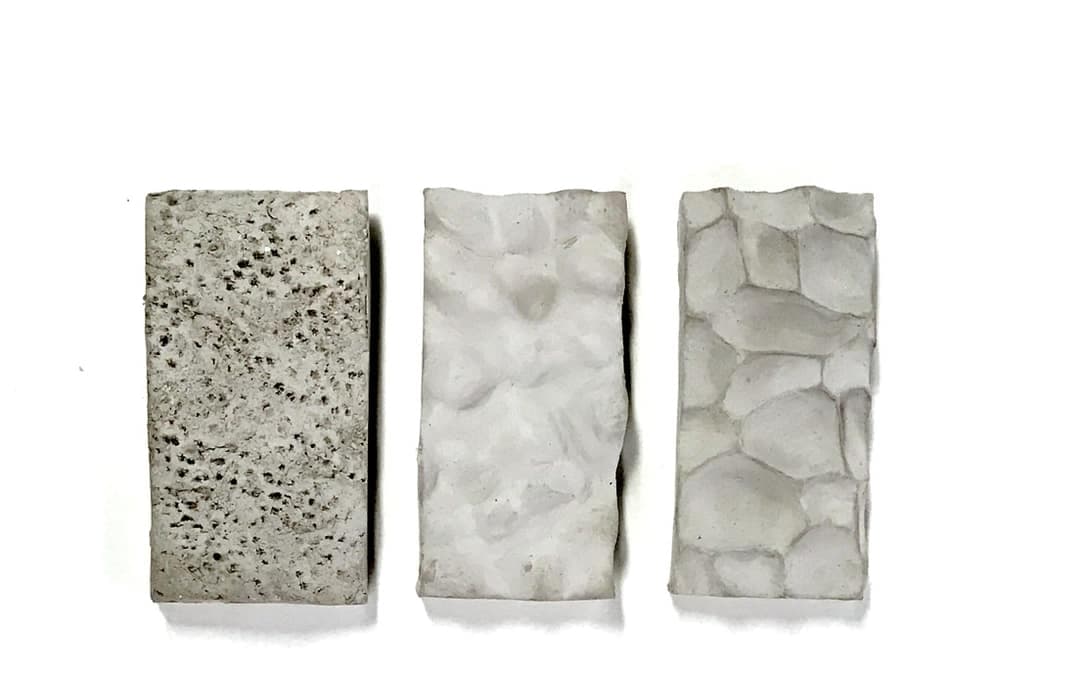
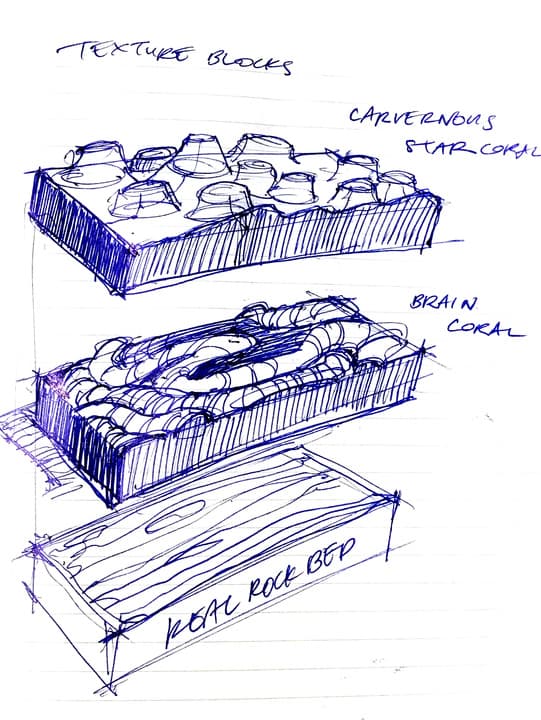
Concrete texture & marine cement
Texture allows maximum growth and micro-ecosystems for animals. Cast in marine cement and mixed with accessible salt water.
05 / 06
Exploration
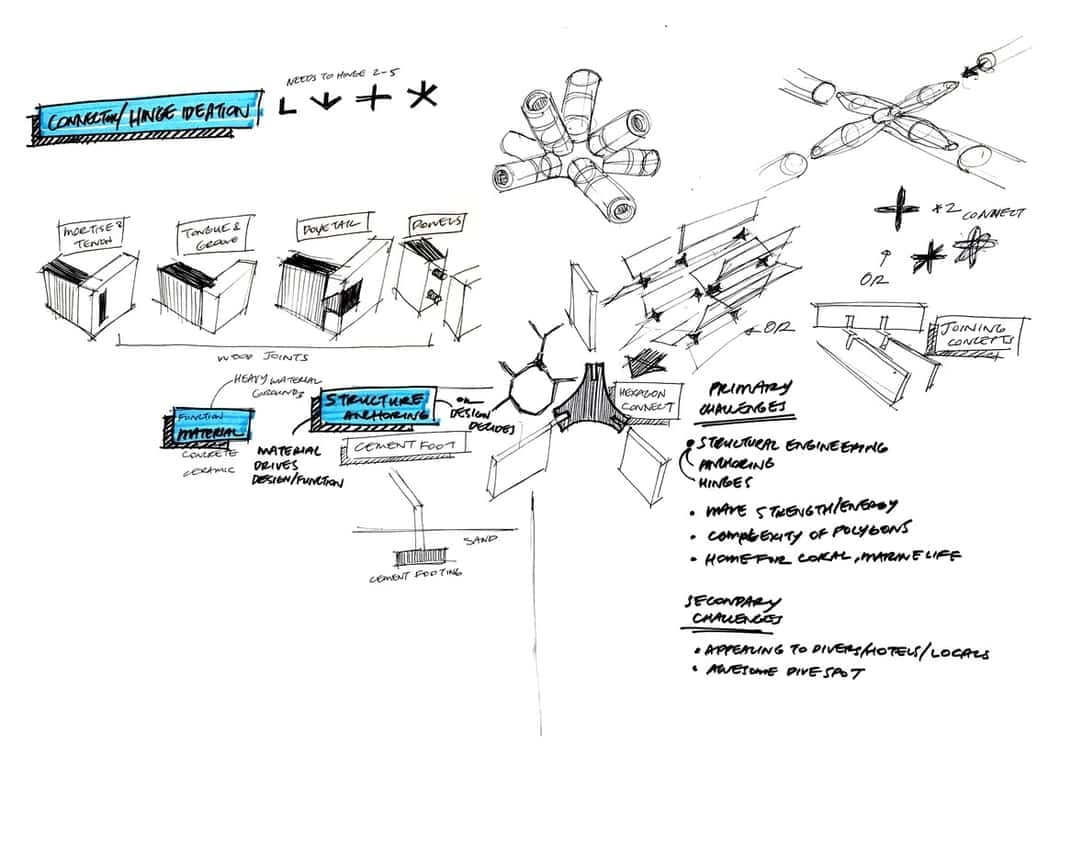
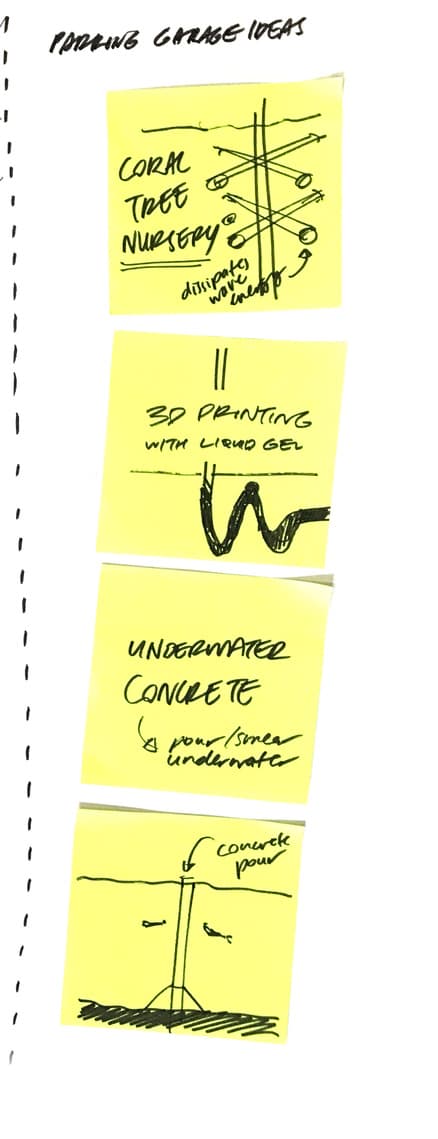
Research & development
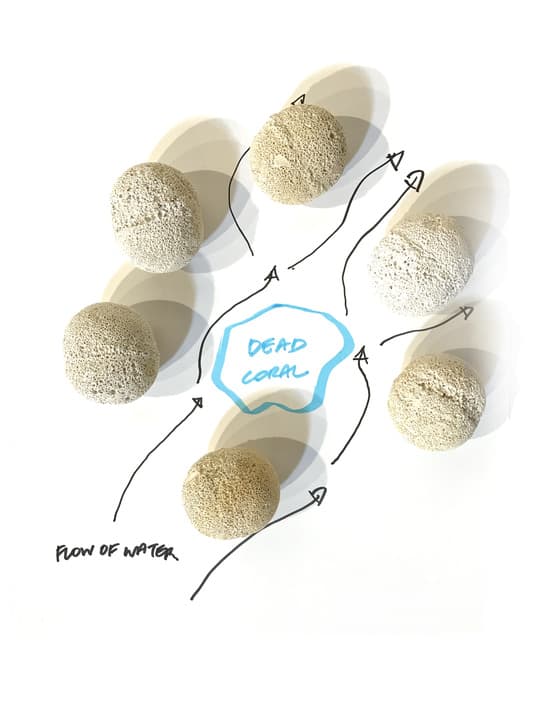
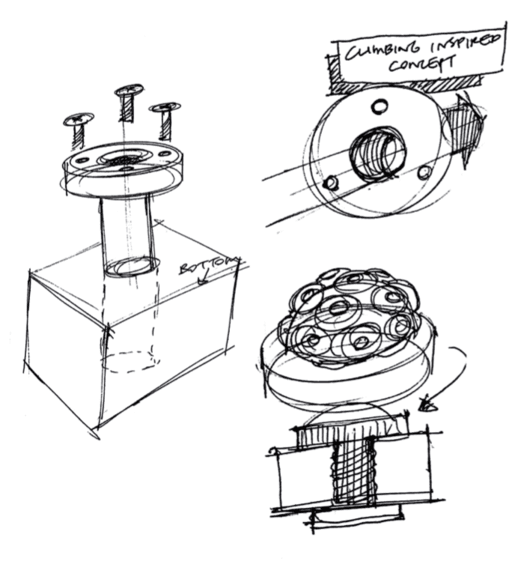
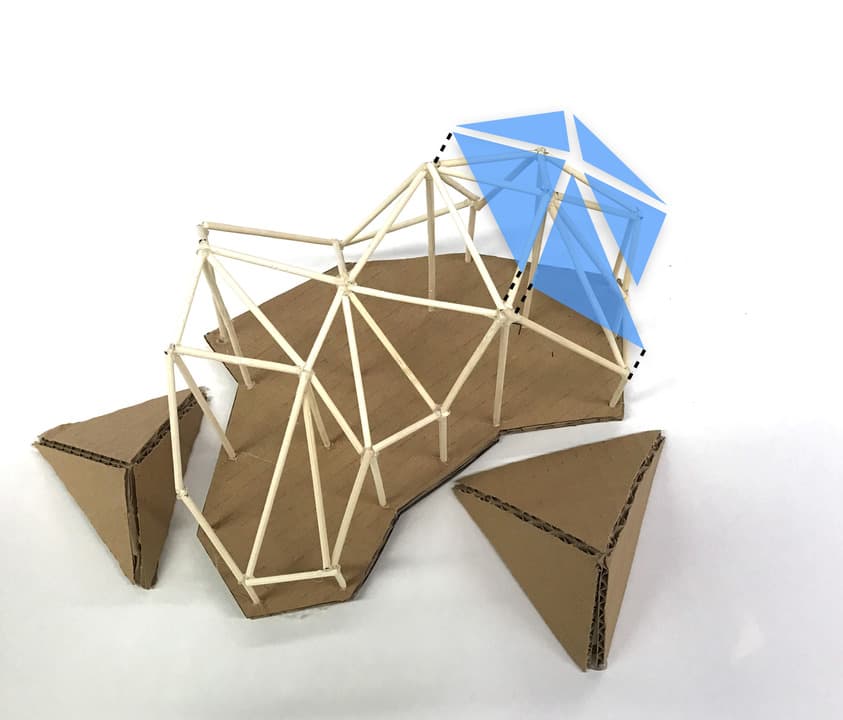
My success criteria are guided by qualitative and quantitative information from my research. By converging guided by insights from my scientific advisors and diverging with blue sky concept exploration, I managed to balance between exploration and feasibility in my design.
06 / 06
Ongoing project
Working with scientific advisors
Currently, we are re-engaging scientists leading the field of coral restoration. Our goal is to concept test designs with them before entering into the physical prototyping process.
Please let us know if you're interested in chatting. This is our ongoing passion project that we are always open for other collaborators.
Key takeaway
Converging and diverging with scientific advisors
From my experience working with cross-disciplinary teams, I learned that we all must embrace our own process and open ourselves up to learning from others. Through this open and collaborative project I balanced scientific complexity with design to find new opportunities for coral restoration grounded in the reality of science and the dreamscape of the future.